2026-11-14 · Carlos Mendoza
Water Damage From Winter Storms In Los Angeles: Immediate Steps
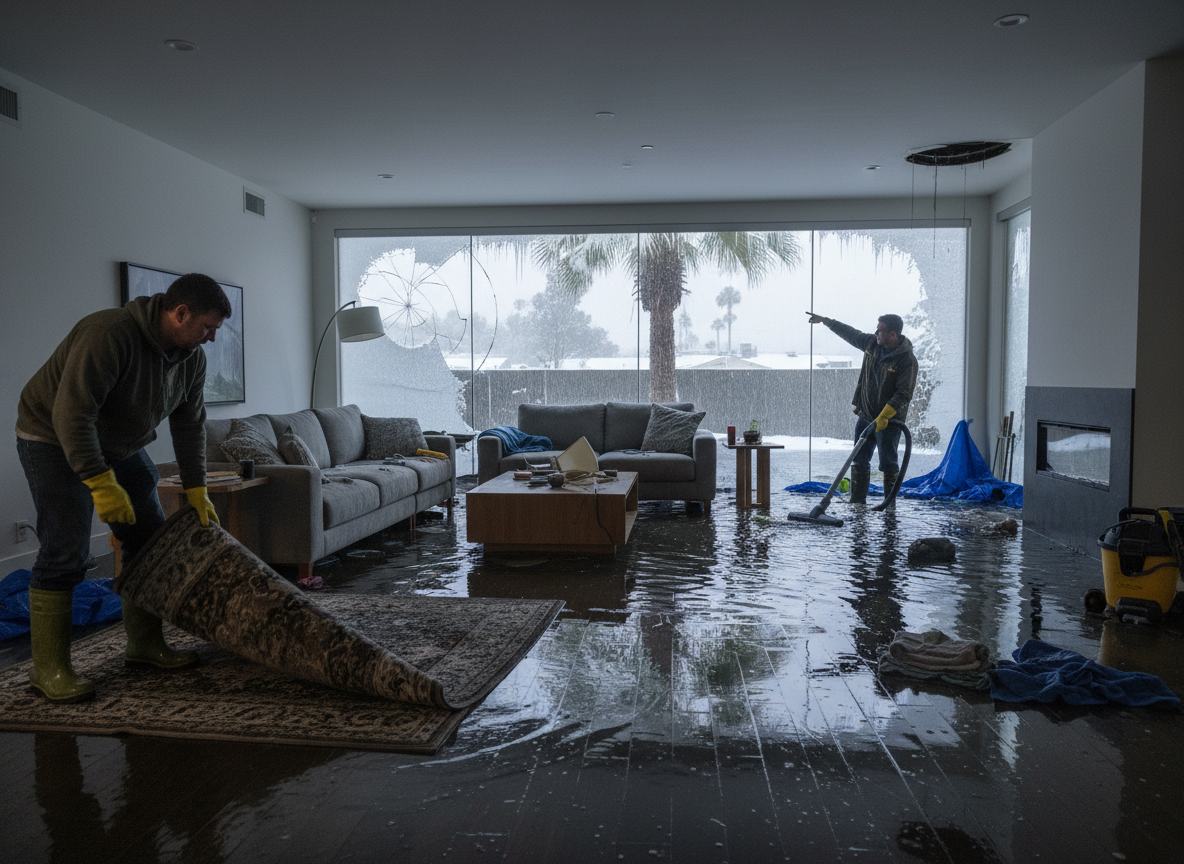
After winter storms hit Los Angeles, the immediate priority is stopping the water source and removing standing water within the first 24 to 48 hours to limit mold growth in the Mediterranean climate's mild but wet periods.
Assess the Source and Safety
Start by locating the entry point, whether roof leaks around the Hollywood Sign area or hillside runoff near Griffith Observatory that funnels water into older bungalows in Silver Lake and Echo Park. Turn off electricity if water reaches outlets, then document the damage with photos before any cleanup. Homes built before 1960 in Downtown and Koreatown often have outdated plumbing that fails faster under sustained rain, so check crawl spaces and basements first. Avoid entering rooms with sagging ceilings or strong electrical smells.
Remove Water and Protect Belongings
Extract standing water using pumps or wet vacuums, focusing on areas like Venice and Santa Monica where coastal moisture combines with storm runoff. Move furniture and rugs to dry zones, then lift carpets in Westwood and East Los Angeles homes where slab foundations can trap moisture underneath. Open windows when outdoor humidity drops during the dry spells between storms, but close them if more rain is forecast. This step prevents warping in hardwood floors common in 1920s-1950s housing stock throughout Boyle Heights and Watts.
Dry the Structure Thoroughly
Set up air movers and dehumidifiers aimed at wall cavities and subfloors, especially in South Central properties where concrete slabs sit close to the water table. Monitor moisture levels with meters for at least three to five days, as Los Angeles summers stay warm and dry but hidden pockets can retain dampness. In Pasadena and Glendale homes near the address at 5007 Eagle View Cir, check attics for insulation saturation that can lead to ceiling collapse if left untreated. Emergency water damage restoration teams often handle these hidden areas when property owners lack equipment.
Prevent Secondary Damage
Treat affected surfaces with antimicrobial solutions to stop mold in the humid pockets that form after storms, particularly in older multi-unit buildings in Koreatown. Remove and replace saturated drywall up to 18 inches above the water line in East Los Angeles residences. Water damage restoration addresses long-term drying that DIY methods miss in expansive layouts like those near Dodger Stadium. Keep detailed records of every action for insurance claims common after winter events in the region.
When to Call Professionals
Contact a local crew if water reaches electrical systems or affects more than one room, as seen in hillside properties around the Getty Center. Understanding repair costs for water damage in Los Angeles homes outlines typical ranges for extraction and drying based on square footage. For homes in areas like Burbank, local considerations for water damage in hillside Los Angeles properties explain terrain-specific risks. Business hours run Mon–Fri 8am–6pm and Sat 9am–2pm for direct support.