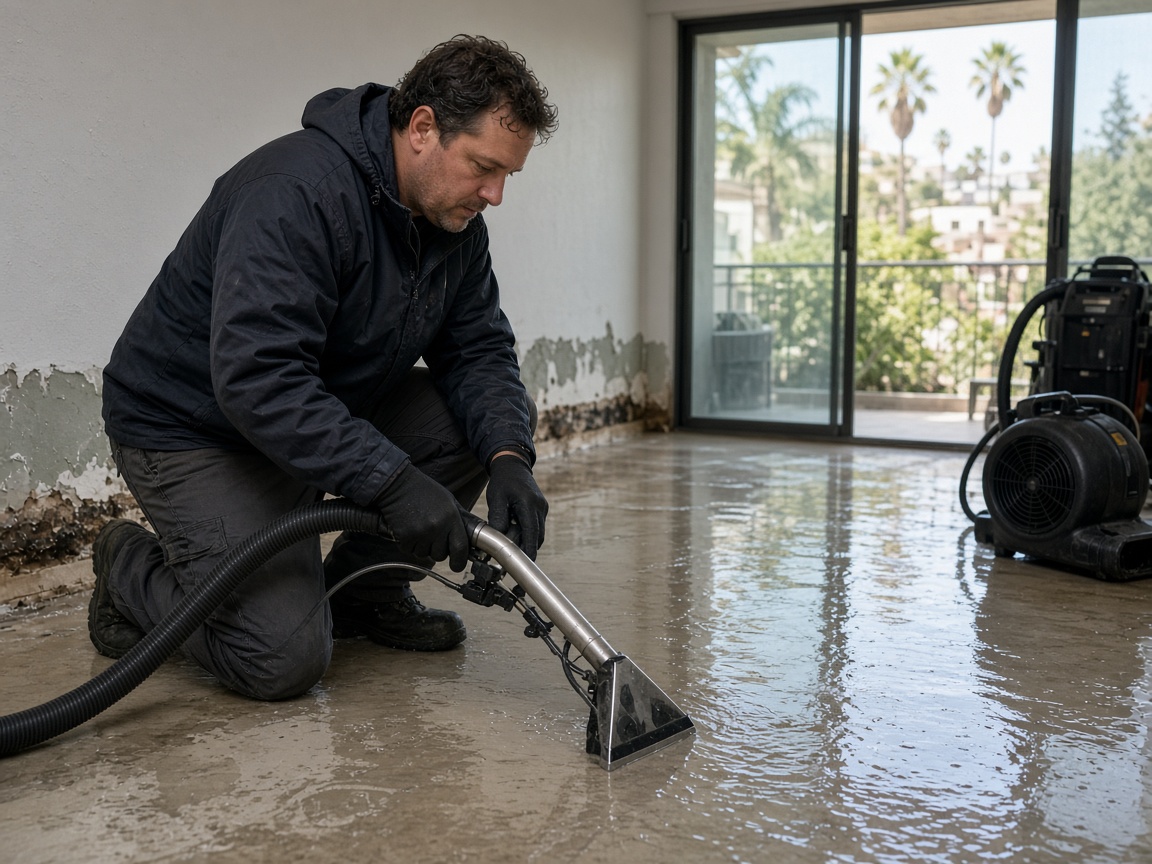
Los Angeles Mediterranean climate brings concentrated winter rains that test drainage around older single-family homes in Boyle Heights and East Los Angeles, where many structures still rely on original clay or cast-iron lines installed decades ago. These lines often fail at joints after root intrusion or seismic shifting, sending water under raised foundations or into crawl spaces that dry slowly once the rain stops. Restoration crews must account for the way stucco and plaster retain moisture longer than drywall, requiring extended dehumidification runs to prevent hidden mold growth behind exterior walls common in Westwood and Silver Lake.
Multi-story apartments and bungalows in Koreatown and Echo Park frequently suffer from shared plumbing stacks that leak between units, complicating containment because water migrates through floor joists and party walls. Technicians use moisture meters calibrated for local materials and create negative-pressure zones to keep spores from spreading into adjacent living spaces. Summer heat can accelerate surface drying while leaving deeper layers damp, so protocols include follow-up checks days after initial extraction to verify equilibrium moisture levels in subfloors.
Terrain around the Hollywood Hills and near Dodger Stadium creates runoff patterns that funnel water toward lower lots during storms, overwhelming older storm drains in South Central and Watts. Restoration work here often involves removing saturated insulation from crawl spaces and treating concrete slabs that hold water for weeks. Crews document every step with photos because insurance adjusters familiar with Los Angeles construction want clear proof that hidden damage was addressed before finishes are replaced.
Technician insight
In Los Angeles the thing that catches most people out with water damage restoration is how stucco and plaster walls in pre-war homes around Echo Park and Boyle Heights trap moisture long after the rain stops, especially when summer heat masks the problem until mold appears weeks later.
Winter Leak in Hollywood Bungalow
Water from a cracked cast-iron line under a 1920s home near the Hollywood Sign soaked through the living room subfloor and into the crawl space. Extraction removed several hundred gallons, then targeted drying prevented spread into neighboring units. New subfloor sections and moisture barriers were installed, returning the space to pre-loss condition without further issues during the next rain cycle.
Water Damage Restoration Services We Offer
✓Burst Pipe Water Extraction
Rapid removal of standing water from pipe failures common in pre-1960s homes across Downtown and Echo Park before moisture reaches subfloors.
✓Storm Flood Restoration
Cleanup and drying after heavy winter rains overwhelm yards and foundations in areas like Silver Lake and Boyle Heights.
✓Sewage Backup Remediation
Safe extraction and sanitization of contaminated water from older sewer lines that back up during rain events in South Central Los Angeles.
✓Ceiling and Wall Drying
Targeted drying of water-damaged plaster and drywall in multi-unit buildings where leaks travel between floors in Koreatown apartments.
✓Crawl Space Water Removal
Pumping and dehumidification of moisture trapped under raised homes in Westwood and Santa Monica after drainage issues.
Water Damage Restoration Cost in Los Angeles, CA
| Service | Typical Range | What Affects It |
|---|---|---|
| Emergency Water Extraction | $600–$1,800 | Varies by volume and number of stories in hillside homes. |
| Full Drying And Monitoring | $400–$1,200 | Length of time required depends on plaster versus drywall. |
| Sewage Cleanup Add-On | $800–$2,500 | Increases with contamination level and disposal needs. |
| Crawl Space Restoration | $900–$2,200 | Higher when insulation removal and vapor barrier work required. |
Ranges are typical for Los Angeles, CA and confirmed with an exact written quote before any work starts.
How it works
- 1
On-Site Assessment
Technician inspects affected rooms, measures moisture in walls and floors, and identifies the water source while documenting conditions for insurance.
- 2
Water Extraction
Industrial pumps and vacuums remove standing water from carpets, hardwood, and subfloors before it migrates further.
- 3
Drying And Dehumidification
Air movers and dehumidifiers run continuously, with daily moisture readings to confirm materials reach safe levels.
- 4
Sanitization And Repairs
Antimicrobial treatment followed by removal of unsalvageable materials and installation of matching replacements.
- 5
Final Verification
Post-job walkthrough confirms moisture readings meet standards and any affected areas in adjacent rooms are addressed.
Pricing
Upfront quotes after inspection; final cost depends on water volume, affected square footage, and access in older Los Angeles construction.