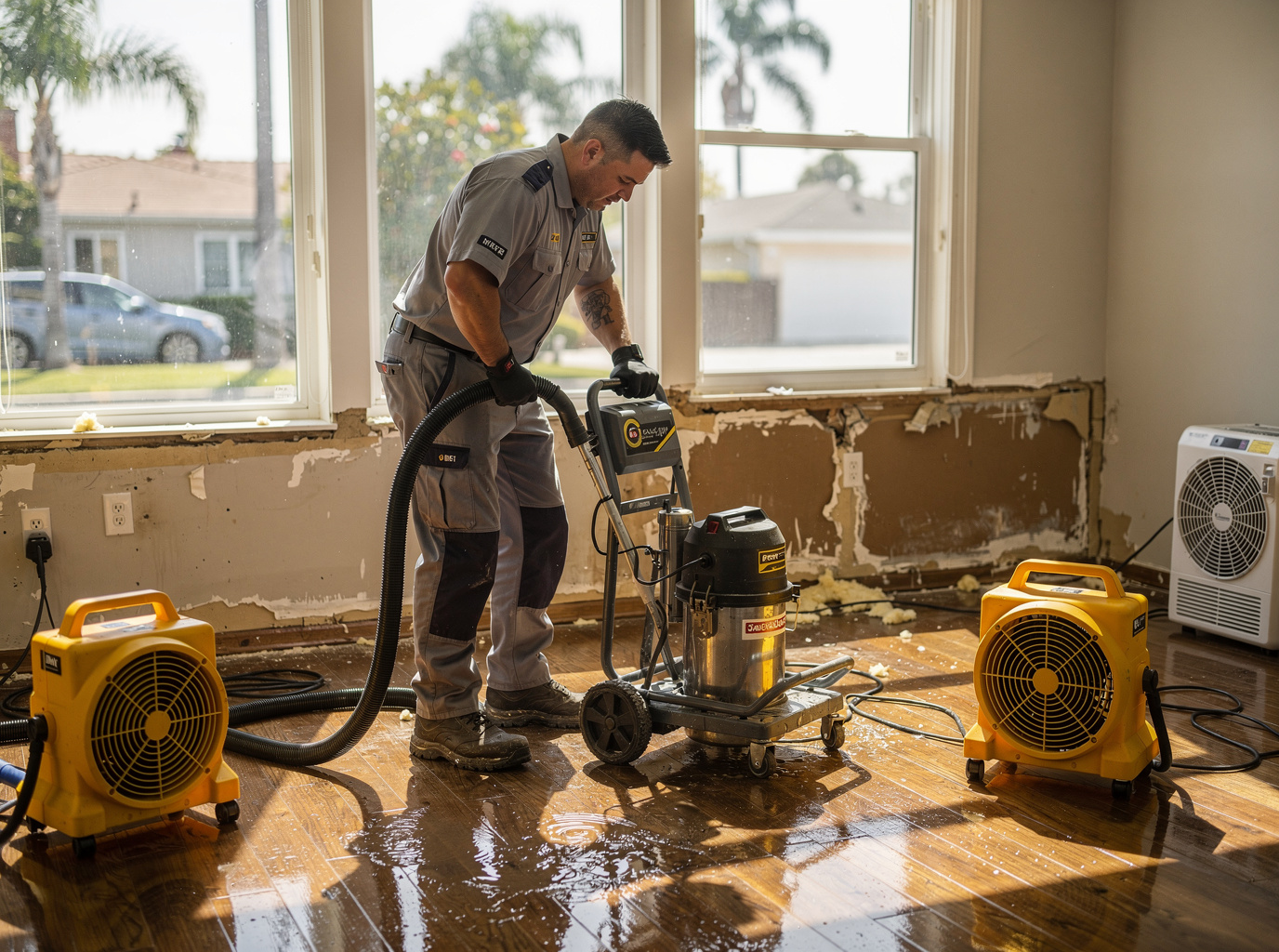
Los Angeles experiences concentrated winter rains that overwhelm older drainage systems in neighborhoods like Silver Lake and Echo Park, where many homes built before 1950 feature stucco over wood framing and slab foundations that trap moisture. Flood water often enters through foundation cracks or low-lying entries, saturating insulation and subfloors. Technicians must remove baseboards early to check for hidden saturation along the slab edge, because Mediterranean summers can mask ongoing issues until mold appears months later.
In areas such as Boyle Heights and East Los Angeles, clay-heavy soils expand during storms and push against foundations, creating new entry points for water. Restoration crews use moisture meters on drywall up to three feet above visible water lines, since capillary action carries moisture higher in older plaster walls common around Griffith Observatory and Los Angeles City Hall vicinities. Disposal of saturated materials must follow county rules for construction debris, which adds steps when handling mixed flood and possible sewage backups from overloaded city lines.
Pasadena and Glendale hillside properties face additional risks from runoff channeling down streets during heavy rain events. Crews often deploy air movers and dehumidifiers in tight interior layouts typical of mid-century homes, monitoring relative humidity daily to prevent warping of hardwood floors found in Westwood and Koreatown buildings. Proper sequencing avoids trapping moisture behind cabinets or under built-in shelving that many local homes retain from original construction.
Technician insight
In Los Angeles the thing that catches most people out with flood damage restoration is how quickly winter rain saturates the old stucco-over-slab homes in Silver Lake and Echo Park; once water sits against the foundation for even a day the clay soil holds it there, so skipping baseboard removal almost always leaves hidden moisture that shows up as mold once the dry summer heat returns.
Silver Lake Bungalow After January Storm
Heavy rain pushed water under the front door of a 1940s bungalow, soaking the living room hardwood and seeping into the hallway plaster. We removed baseboards, found saturation three feet up the walls, and extracted water before running drying equipment for four days. Once moisture readings stabilized we replaced the affected flooring and drywall sections.
Flood Damage Restoration Services We Offer
✓Emergency Water Extraction
Rapid removal of standing flood water from living spaces using truck-mounted pumps to limit further absorption into older Los Angeles flooring and walls.
✓Structural Drying and Dehumidification
Targeted drying of wood framing, drywall, and concrete slabs common in pre-1970 homes across Echo Park and Silver Lake after winter storm flooding.
✓Basement and Crawlspace Flood Cleanup
Clearing water from below-grade areas in hillside properties in Pasadena and Glendale while addressing soil expansion risks around foundations.
✓Sewage-Contaminated Flood Restoration
Safe removal and sanitization after combined stormwater and sewer backups that frequently occur in flat neighborhoods like Boyle Heights during heavy rains.
✓Flooring and Subfloor Restoration
Assessment and replacement of saturated hardwood, tile, or carpet in older Los Angeles homes where slab foundations make hidden moisture detection critical.
Flood Damage Restoration Cost in Los Angeles, CA
| Service | Typical Range | What Affects It |
|---|---|---|
| Initial Assessment And Moisture Mapping | $250–$450 | Higher in multi-story homes or when accessing attics in older Los Angeles properties. |
| Water Extraction Per Day | $800–$1,800 | Depends on volume and whether truck-mounted equipment is needed for larger flood events. |
| Drying Equipment Rental Per Day | $150–$350 | Number of air movers and dehumidifiers required increases with square footage and wall saturation. |
| Sewage-Contaminated Cleanup Add-On | $500–$1,200 | Extra PPE, disinfectants, and disposal handling for backups common in flat neighborhoods. |
Ranges are typical for Los Angeles, CA and confirmed with an exact written quote before any work starts.
How it works
- 1
On-Site Assessment
Technicians inspect affected rooms, measure moisture levels in walls and floors, and identify hidden water paths typical in Los Angeles stucco and slab construction.
- 2
Water Removal
Pumps and extractors clear standing water, followed by removal of unsalvageable materials before drying begins in the affected structure.
- 3
Drying And Monitoring
Industrial air movers and dehumidifiers run while daily moisture readings track progress through older plaster and wood framing.
- 4
Restoration And Repairs
Replacement of drywall, flooring, and finishes completes the job once structures reach dry standards suitable for Los Angeles building codes.
Pricing
Pricing varies by water volume, affected square footage, and whether sewage contamination is present; most jobs require an on-site inspection for accurate scope.