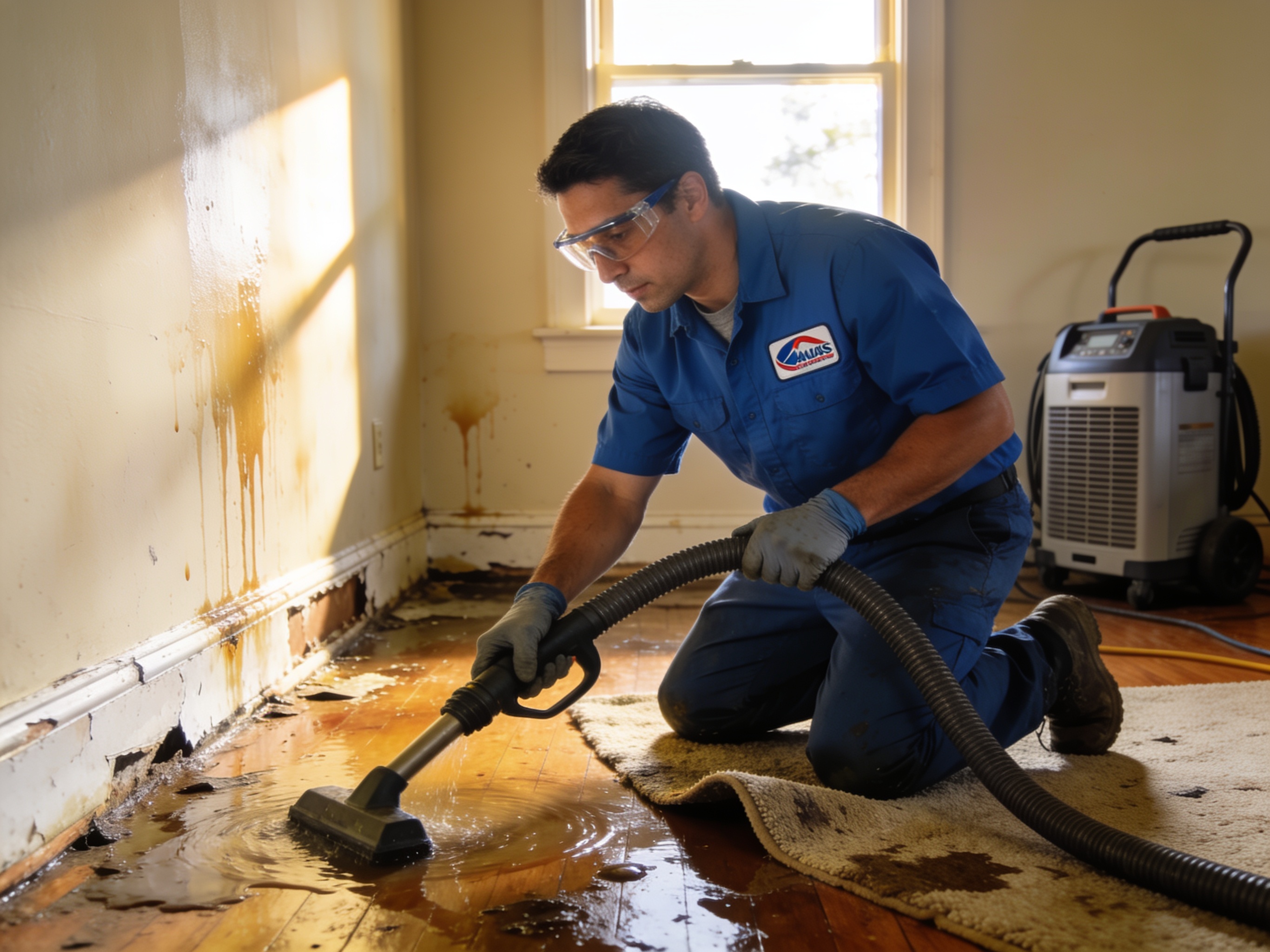
Los Angeles homes built before 1960 often feature plaster walls over wood lath and shallow foundations that sit close to the water table in areas like Boyle Heights and East Los Angeles. When a supply line fails or winter rains push water under the slab, moisture travels laterally through the lath and into adjacent units in multi-family buildings common in Koreatown and Silver Lake. Restoration crews must open walls in sections rather than full demolition to preserve load-bearing plaster while using moisture meters calibrated for the region's variable soil moisture.
The Mediterranean pattern of long dry summers followed by concentrated winter storms creates hidden damage in stucco exteriors around Griffith Observatory and Los Angeles City Hall neighborhoods. Cracks that stay invisible through summer allow wind-driven rain to saturate insulation behind the cladding. Technicians pull baseboards early, place air movers at 45-degree angles against the wall plane, and monitor relative humidity daily because the dry season air can mask ongoing migration into subfloors.
Terrain in the Hollywood Hills and around Dodger Stadium funnels runoff into lower lots in Echo Park and Silver Lake after even moderate storms. Restoration work here routinely includes directing temporary pumps around existing retaining walls and checking for compromised electrical boxes that sit below grade in many 1920s bungalows. Crews document every step with photos because insurance adjusters familiar with Los Angeles older stock require proof that affected cavities were fully dried before closure.
Technician insight
In Los Angeles the thing that catches most people out with Water Damage Restoration Near Me is how the long dry summers let small stucco cracks in 1920s homes in Echo Park and Silver Lake go unnoticed until the first concentrated winter rain pushes water behind the cladding and into the lath.
Pipe Burst in 1940s Bungalow
A supply line failed behind a kitchen wall in a 1947 home in Boyle Heights. Water had traveled under the hardwood into the adjacent dining room and down into the crawl space. Crews extracted standing water, opened baseboards for airflow, and ran drying equipment for four days until readings matched ambient levels before reinstalling trim.
Water Damage Restoration near Me Services We Offer
✓Emergency Water Extraction
Rapid removal of standing water from living spaces and crawl spaces in multi-story homes common throughout Hollywood and Silver Lake before secondary damage sets in.
✓Structural Drying After Pipe Bursts
Targeted drying of plaster and lath walls in pre-1960 buildings in Echo Park and Boyle Heights using moisture mapping to avoid unnecessary demolition.
✓Ceiling Leak Repair From Roof Penetrations
Drying and restoration of ceilings in single-family homes near Griffith Observatory and the Hollywood Sign where winter rains expose flashing failures.
✓Flooded Garage Restoration
Extraction and drying of attached garages in flat-lot properties in Westwood and Santa Monica where runoff collects against foundation walls.
✓Subfloor Moisture Removal
Removal of trapped moisture under hardwood and tile in older homes in Downtown and Koreatown to prevent cupping and mold growth between floors.
Water Damage Restoration near Me Cost in Los Angeles, CA
| Service | Typical Range | What Affects It |
|---|---|---|
| Initial Assessment | $150–$350 | Varies by property size and number of levels in older multi-story homes |
| Emergency Extraction | $800–$2,200 | Depends on volume of water and access in dense neighborhoods like Koreatown |
| Structural Drying | $1,200–$3,500 | Influenced by wall materials and duration needed in plaster homes |
| Subfloor Drying | $600–$1,800 | Higher in hillside properties with limited crawl space access |
Ranges are typical for Los Angeles, CA and confirmed with an exact written quote before any work starts.
How it works
- 1
On-Site Assessment
Technicians arrive during posted hours, map moisture with meters, and identify affected cavities in the specific construction type found in the neighborhood.
- 2
Water Removal
Standing water is extracted using truck-mounted and portable units suited to access constraints in hillside and dense urban lots.
- 3
Drying And Monitoring
Air movers and dehumidifiers are placed, with daily readings recorded until materials return to ambient moisture levels typical for Los Angeles.
- 4
Final Documentation
Photos and moisture logs are prepared for the homeowner and any insurance claim before walls are closed.
Pricing
Upfront quotes provided after assessment during business hours at the Eagle View Circle location.