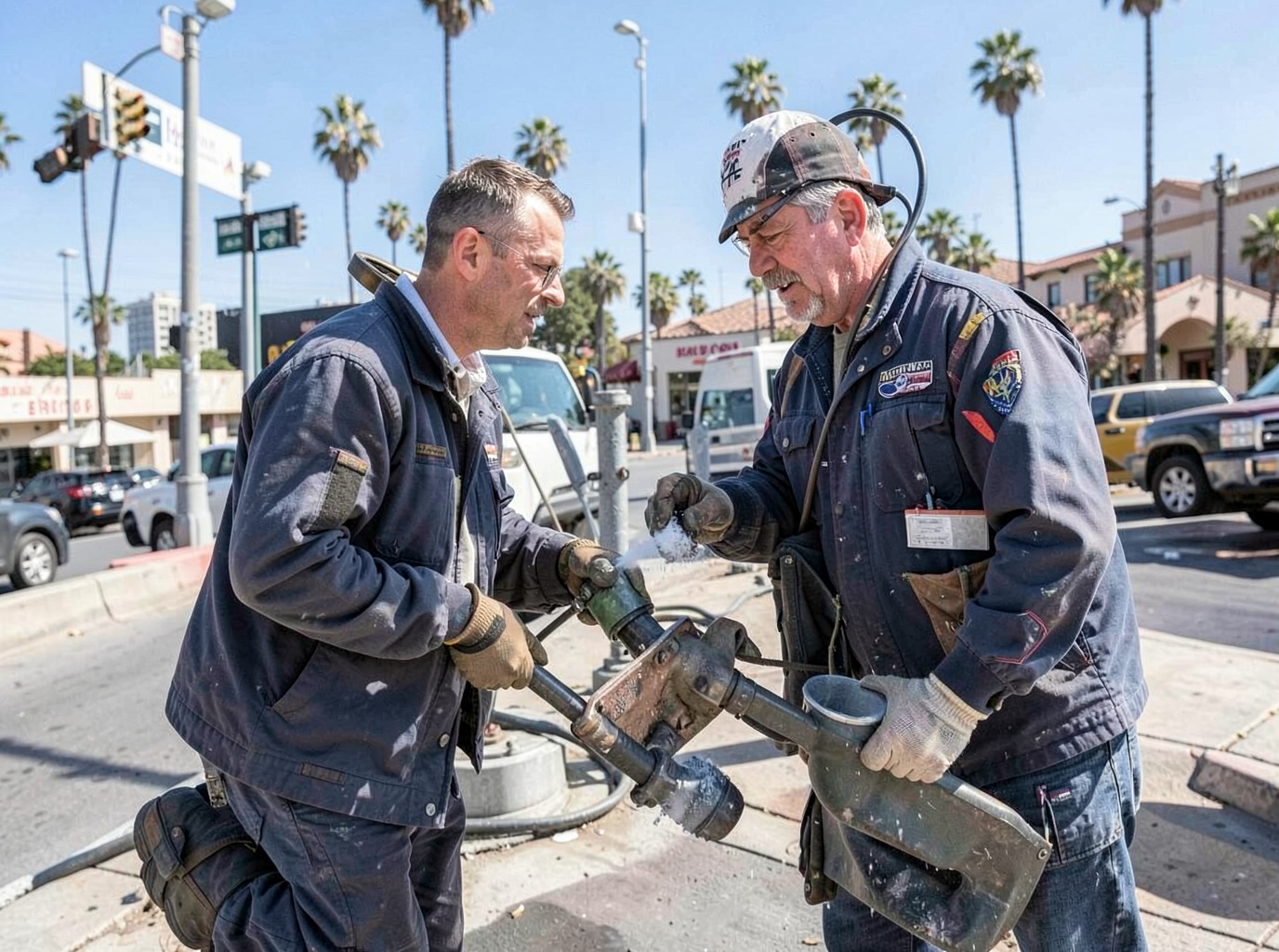
Los Angeles homes built before 1960 in neighborhoods like Echo Park and Boyle Heights often sit on raised foundations or early slab pours that trap water against wood joists or under flooring. When extraction is delayed, moisture migrates into plaster walls and reaches the lath, creating hidden pockets that later support mold even after the visible water is gone. Technicians use truck-mounted pumps rated for 200-plus gallons per minute followed by low-grain dehumidifiers to pull moisture from the concrete itself before it reaches the Getty Center or Dodger Stadium humidity levels common in summer.
The Mediterranean climate brings sudden winter rains that overwhelm older storm drains in Koreatown and South Central, sending water under door thresholds and into finished basements. Extraction crews must account for the high clay content in local soils that slows natural drainage, especially around Santa Monica and Venice properties near the water table. Portable extraction wands and moisture meters calibrated for stucco and lathe construction prevent over-cutting while meeting Los Angeles County disposal rules for contaminated water.
In multi-story buildings common in Westwood and Downtown, water travels through elevator shafts and shared walls, requiring extraction on multiple floors simultaneously. Crews document every step with photos and moisture logs so insurance adjusters can see exactly where water crossed from one unit into another. This documentation matters when older copper lines in Hollywood bungalows fail and affect neighboring properties built on the same lot line.
After extraction, crews test for hidden saturation in subfloors using infrared cameras because Los Angeles dry summers can mask residual moisture that later warps hardwood installed directly over concrete. Homeowners in Silver Lake and East Los Angeles are advised to leave carpets and padding in place until extraction is complete so the equipment can reach the backing without creating new seams that trap water.
Technician insight
In Los Angeles the thing that catches most people out with water extraction is older plaster walls in Echo Park and Silver Lake homes that keep pulling moisture back from the slab long after the pumps leave. The Mediterranean climate dries the surface fast in summer, so homeowners think the job is done, but the clay soil and tight lot lines trap water against the foundation until it reaches the lath.
Slab Leak in Silver Lake Bungalow
A supply line failed under a 1948 concrete slab and water reached the living room hardwood. Extraction crews used portable pumps and wands to pull water from between boards and under the slab edge. Moisture mapping showed saturation extending three feet into the adjacent wall. After removal and targeted drying, the floor was saved without full replacement.
Water Extraction Services Services We Offer
✓Emergency Flood Extraction
Immediate removal of standing water from rain or burst pipes using high-capacity pumps before it reaches electrical systems or spreads to adjacent units in Downtown high-rises.
✓Carpet and Pad Extraction
Lift and extract water from wall-to-wall carpet and padding in older Hollywood and Silver Lake homes where glued-down installations trap moisture against concrete slabs.
✓Hardwood Floor Extraction
Pull water from between boards and subfloors in pre-1950 bungalows common in Echo Park and Boyle Heights before cupping or mold sets in under the finish.
✓Slab Leak Extraction
Remove water that has migrated under concrete slabs in Westwood and Santa Monica homes after supply line failures, preventing long-term damage to radiant heat lines.
✓Appliance Leak Extraction
Extract water from refrigerator, washer, or water heater failures that reach finished spaces in Koreatown apartments and multi-unit buildings near Los Angeles City Hall.
✓Storm Drain Backup Extraction
Clear water pushed into lower levels during heavy rains that overwhelm drains in South Central and Watts neighborhoods where older infrastructure meets clay soil.
Water Extraction Services Cost in Los Angeles, CA
| Service | Typical Range | What Affects It |
|---|---|---|
| Single room extraction | $250–$650 | Varies with water depth and whether carpet or hardwood is present |
| Whole-house extraction | $800–$2,200 | Higher in multi-story homes with slab leaks common in Santa Monica and Westwood |
| Appliance leak extraction | $175–$450 | Depends on how far water traveled under cabinets or into walls |
| Storm backup extraction | $350–$900 | Increased when clay soil slows drainage in South Central or Watts |
Ranges are typical for Los Angeles, CA and confirmed with an exact written quote before any work starts.
How it works
- 1
Site Assessment
Technicians measure water depth, identify the source, and test for contaminants while noting construction type in the specific Los Angeles neighborhood.
- 2
Water Removal
Truck-mounted and portable pumps extract standing water, followed by wand extraction on carpets and subfloors to reach trapped moisture.
- 3
Moisture Mapping
Infrared cameras and meters locate hidden saturation in walls, slabs, and under hardwood common in older Los Angeles housing stock.
- 4
Documentation And Disposal
Photos, logs, and proper disposal of extracted water meet Los Angeles County requirements before drying equipment is placed.
Pricing
Prices depend on water volume, number of affected rooms, and access in older Los Angeles buildings; upfront quotes provided after inspection.